
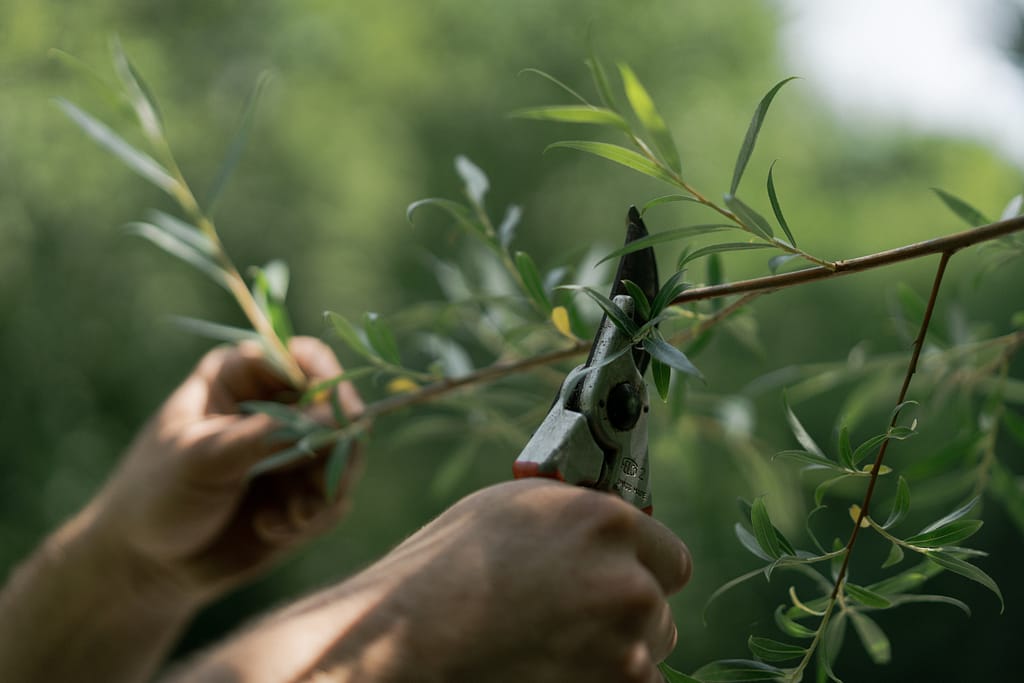
When trees grow unchecked, they can encroach on buildings, block light, or develop structural weaknesses that become hazardous. Professional pruning not only enhances your tree’s appearance but also improves its health and longevity while reducing potential risks.
At Moorland Tree Care, we provide skilled, targeted pruning services for all tree species across Exeter and Devon. Whether you need branches lifted away from your home, the crown reduced to improve light, or a specialist technique like pollarding, our experienced arborists will help your trees thrive while addressing your specific concerns.
Like any living organism, trees benefit tremendously from proper care. Professional pruning removes dead, diseased, or damaged branches that drain the tree’s resources and create entry points for pathogens. By eliminating these problem areas, we redirect the tree’s energy toward healthy growth and development. Many of our clients are surprised by how dramatically their trees improve after skilled pruning, with lusher foliage and more growth in subsequent seasons.
Unstable branches can fall unexpectedly, potentially causing injury or property damage, especially during Devon’s stormy seasons. Our systematic pruning approach identifies and removes hazardous limbs before they become problems. We assess each tree’s structure, identifying weak branch unions, signs of decay, or other structural issues that could lead to failure. By addressing these concerns proactively, we significantly reduce the risk of branch or tree failure.
Overgrown trees can dominate a landscape, blocking views and casting excessive shade that affects your garden’s enjoyment and your home’s natural light. Careful pruning opens the canopy, allowing filtered light to reach your property and understory plants. The visual impact is often dramatic creating a more balanced, attractive tree while brightening your outdoor and indoor spaces.
Trees that grow too close to structures can damage foundations, gutters, roofs, and walls. Regular pruning maintains appropriate clearance between your trees and buildings, preventing costly damage and potential insurance issues. For properties with overhead utility lines, pruning creates necessary clearance to prevent service disruptions.

What it involves: Carefully reducing the overall size of the tree’s canopy while maintaining its natural shape and structure.
When it’s needed:
What it involves: Removing lower branches to increase clearance beneath the tree.
When it’s needed:


What it involves: Selective removal of branches throughout the crown to reduce density.
When it’s needed:
What it involves: Removal of dead, dying, diseased, or damaged branches throughout the crown.
When it’s needed:


What it involves: A specialised pruning technique that involves the removal of all branches back to the main stem or to well-established pollard heads.
When it’s needed:
What it involves: This process targets the removal of fast-growing shoots that emerge directly from the trunk or major limbs, often triggered by stress or heavy pruning. These shoots, sometimes called water sprouts, can compromise a tree’s structure if left unchecked.
When it’s needed:


What it involves: Species-specific pruning techniques tailored to fruit-bearing trees and ornamental shrubs.
When it’s needed:
For more details on tree work terminology see the Arboricultural Association brief guide
Different pruning objectives are best achieved at specific times of year:
Winter (Dormant Season): Ideal for structural pruning and most major pruning work. In the UK, the optimal time to prune most deciduous trees is during their dormant period, typically between late autumn (November) and early spring (March). Trees are dormant, minimising stress and allowing clear visibility of branch structure.
Spring: Good for corrective pruning after winter damage, but avoid heavy pruning of spring-flowering trees until after flowering.
Summer: Light pruning to direct growth and remove problematic branches is appropriate. Good time to see the full canopy structure.
Autumn: Generally best to avoid significant pruning as fungi that cause decay are particularly active and wound healing is slower.
Different tree species have unique pruning requirements:
To learn more about how trees work and when to prune, check the Arboricultural Association’s Guide to Tree Pruning.
For urgent safety concerns or storm damage, our team can assess whether immediate intervention is necessary. When emergency situations arise, we can direct you to our emergency tree services for immediate assistance.
Our qualified arborists begin with a thorough evaluation of your tree’s:
This assessment determines the most appropriate pruning technique and extent of work required.
Based on our assessment, we develop a tailored pruning plan that:
Our trained tree surgeons carry out the work using:
We complete the job by:
Tree pruning in Devon often involves navigating regulations on Tree Preservation Orders (TPOs) or properties within Conservation Areas. Our team can handle all the paperwork and guide you through necessary permissions and compliance issues. If your trees are subject to TPO restrictions or your property lies within a designated Conservation Area, we’ll advise you on whether your application is likely to be approved and suggest alternative solutions to help you achieve your specific goals.
Check out our detailed TPO guide to understand your obligations before beginning any work. Our experience with local authorities throughout Devon ensures your pruning project proceeds smoothly while meeting all regulatory requirements. All pruning work is conducted to British Standards (BS3998), ensuring your property’s trees receive professional care that enhances both their health and the surrounding environment.
More information about the protection of Devon’s trees can be found on Devon County Council‘s website.
Tree pruning costs in Devon range from £250 for basic deadwooding to over £3,500+ for complex crown reductions on large trees. For a standard pruning job on a medium-sized tree, the average cost in the South West is around £400-£700. Below is a detailed breakdown of key factors that can influence the final price.
The table below sets out typical costs for standard pruning work with no major complications, alongside expected ranges for specialist or technical pruning where large limbs, rigging, or difficult access are involved.
| Pruning Technique | Standard / Small–Large (Non-Complex) | Technical / Large or Complex Jobs* | What's Included |
|---|---|---|---|
| Crown Reduction | £300 – £900+ | £1,000 – £3,500+ | 15–30% canopy reduction, natural shape maintained |
| Crown Thinning | £250 – £700 | £600 – £1,500+ | 10–20% selective branch removal |
| Crown Lifting | £200 – £600 | £600 – £900+ | Lower branch removal for clearance |
| Dead Wooding | £150 – £500 | £500 – £1,200+ | Removal of dead / dangerous branches |
| Pollarding | £350 – £1,200+ | £1,200 – £2,500+ | Removal back to pollard points |
* Technical pruning may involve rigging, lowering heavy limbs, difficult access, crane use, or working over buildings/roads.
| Service Type | Standard / Typical Cost | Specialist / Complex Range* | Details |
|---|---|---|---|
| Fruit Tree Pruning | £80 – £150 per tree | £150 – £300+ | Species-specific shaping, light thinning |
| Epicormic Growth Removal | £200 – £450 | £450 – £800+ | Remove water shoots, manage regrowth |
| Formative Pruning (young trees) | £150 – £300 | £300 – £600+ | Shaping young trees / structural training |
| Veteran Tree Care | £600 – £2,000+ | £2,000 – £5,000+ | Conservation pruning, habitat work, bracing, advanced interventions |
| Storm Damage Pruning | Standard +50–100% | (depending on risk) | Emergency response over standard pruning |
* Specialist / complex range applies when there’s significant difficulty: heavy limbs, rigging, poor access, safety constraints, or conservation requirements.
While pruning technique plays a major role, many other factors can influence the final cost of tree pruning.
Ready to Get Started?
Every tree pruning job is unique, depending on the species, condition, access, and your objectives. The best way to get a clear price is with a free, no-obligation quote. Our local Devon team will assess your trees, explain all options, and provide a transparent estimate tailored to your needs.
Moorland Tree Care provides professional tree pruning services throughout Exeter and across Devon, including but not limited to:
Exeter, Topsham, Alphington, St Thomas, Pinhoe, Heavitree, Countess Wear, Exminster, Kennford, Ide, Exwick
Exmouth, Honiton, Ottery St Mary, Sidmouth, Seaton, Axminster, Budleigh Salterton, Newton Poppleford, Colyton, Whimple, West Hill, Broadclyst
Crediton, Tiverton, Cullompton, Bampton, Uffculme, Willand, Morchard Bishop, Bow, Halberton, Silverton
Newton Abbot, Totnes, Teignmouth, Dawlish, Kingsbridge, Salcombe, Ivybridge, Brixham, Paignton, Torquay, Stoke Gabriel, Dartmouth
Moretonhampstead, Chagford, Ashburton, Bovey Tracey, Widecombe-in-the-Moor, Princetown, South Brent, Yelverton, Buckfastleigh, North Bovey, Lustleigh, Manaton, Postbridge, Dunsford, Ilsington, Mary Tavy, Horrabridge, Liverton, Bridestowe and more
Don’t risk damaging your valuable trees with improper pruning techniques or delay addressing safety concerns that could lead to property damage or injury. Our expert team will ensure your trees remain healthy, safe, and beautiful for years to come.
Whether you need crown reduction to improve light, crown lifting for better access, or specialised fruit tree pruning to maximize your harvest, we have the expertise and equipment to deliver exceptional results.
The ideal time to prune most trees is during late winter or early spring before new growth begins. However, some species may benefit from summer or autumn pruning. Our team will be able to advise you on your tree’s specific needs.
Most trees benefit from pruning every 1-3 years, depending on their species, age, and health. Young trees may need more frequent shaping, while mature trees typically require less regular maintenance. We can assess your trees and recommend the best pruning schedule.
Permission is required if your tree is protected by a Tree Preservation Order (TPO) or located within a Conservation Area.
Minor pruning of small branches can be done safely by homeowners, but for large trees or anything involving heights or power tools, it’s best to call the professionals. DIY pruning can lead to injury or long-term tree damage.
Permission is required if your tree is protected by a Tree Preservation Order (TPO) or located within a Conservation Area.
If your tree has a TPO, you must apply to your local council’s tree officer before any work begins, this includes pruning, removal, or any other tree surgery. Conservation Areas also have specific rules requiring notice to the council before tree work. Dead, dying, or dangerous trees may have exemptions, but it’s always best to check first. Our team can help identify if your tree is protected and assist with any necessary applications to ensure your tree work is fully compliant.
We remove and responsibly dispose of all green waste unless you request to keep woodchips or logs. Site cleanliness is a priority after every job. The may be a charge for some non-native waste but we’ll always info you of this before the job.
Costs vary depending on the tree’s size, location, access and the amount of work required. We offer free quotes and are happy to assess your trees to give you an accurate estimate.
Yes, we create tailored management plans that schedule regular inspections, maintenance, and treatments to keep your trees healthy long-term. These plans help prevent problems before they occur and ensure work is timed correctly for optimal tree health.
You can request a free quote by filling in our online form with as much detail as possible, including photos if you can. If we have enough information, we’ll provide a quote directly. If not, we may arrange a site visit to assess the work. For non-emergency jobs, we aim to carry out site visits within 7 days of receiving your enquiry.
Just tell us what you need, and we’ll get back to you with a free, no-obligation quote. Simple as that!